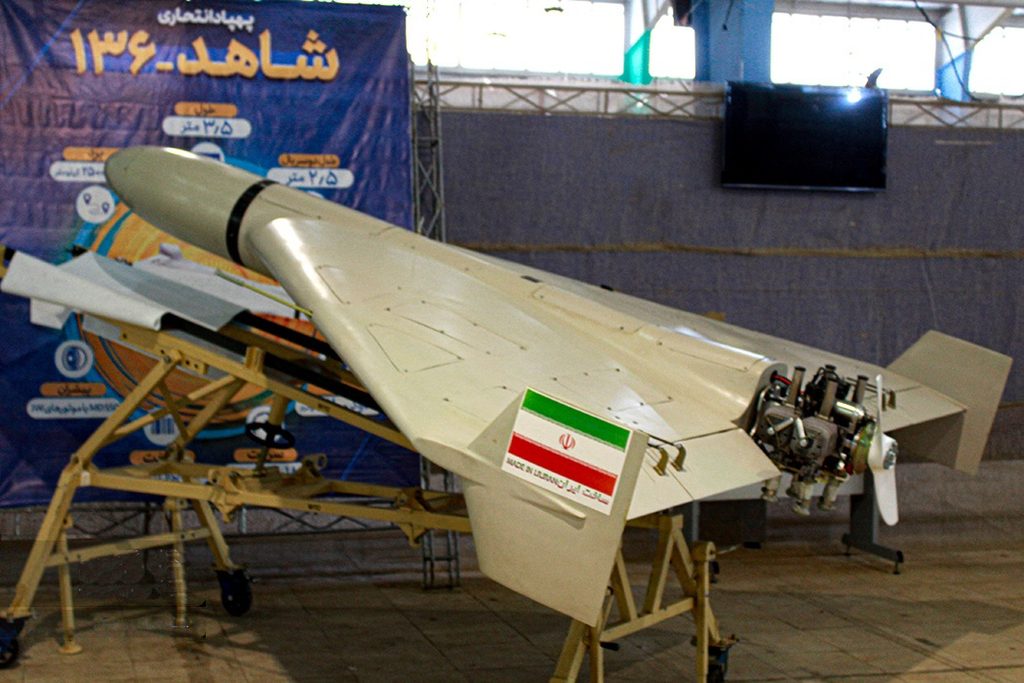
Do the math on the Shuaiba drone attack and it stops looking like an unlucky break. A Shahed-136 drone, the kind Iran builds for somewhere between $20,000 and $50,000 apiece, flew past a defense network built around Patriot interceptors that cost roughly $4 million each, and killed six American soldiers working inside a converted shipping container. The drone was worth less than a used car. The missile system meant to stop it costs more than most people’s houses. And the missile system wasn’t even there.
That kind of asymmetry gets discussed constantly in the abstract, cheap drones versus expensive interceptors, but the Shuaiba drone attack turns it into something concrete: a single event where you can trace the dollar figures, the decisions, and the deaths in a straight line. And it isn’t the first time this exact pattern has played out. Thirty years earlier, at Khobar Towers in Saudi Arabia, a different kind of cheap weapon, a truck bomb, killed 19 American airmen at a site the Pentagon’s own investigators later found had known corrective actions sitting incomplete. The parallels between the two aren’t just uncomfortable. They’re specific enough to be useful.
The Shuaiba Drone Attack, Explained
Operation Epic Fury, the American offensive against Iran, began on February 28, 2026. Within a day, Iran was striking back at US positions across the Gulf, and Kuwait, home to Camp Arifjan and thousands of American troops, sat inside the blast radius.
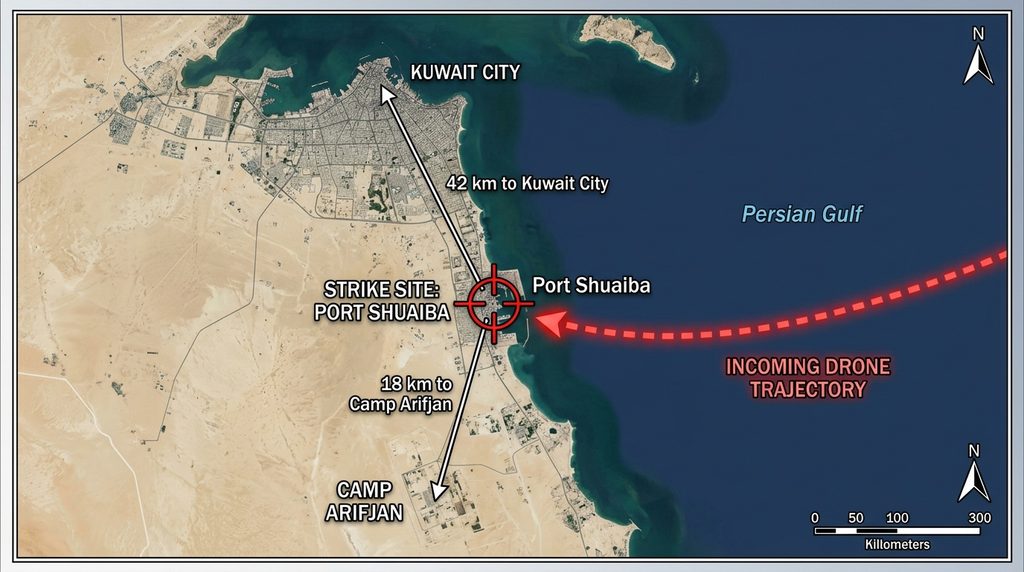
Most US personnel in Kuwait were pushed outward before the war began, relocated to Jordan and Saudi Arabia, away from Iranian missile range. But roughly five dozen soldiers and airmen from the Army’s 103rd Sustainment Command, a logistics unit based in Des Moines, Iowa, were sent somewhere closer instead: Port Shuaiba, a working civilian seaport more than ten miles south of the main base, ringed by oil tanks, refineries, and a power plant.
What awaited them there wasn’t a bunker. Survivors later described a wood and tin workspace about the width of three shipping containers. One soldier, asked to rate the site’s drone defenses, put it plainly: “I would put it in the ‘none’ category, from a drone defense capability. None.” On the morning of March 1, at around 9:15 a.m., the Shuaiba drone attack struck the office trailer directly, carried out by a one-way attack drone believed to be a Shahed-136. Six soldiers died: Capt. Cody Khork, Sgt. 1st Class Nicole Amor, Sgt. 1st Class Noah Tietjens, and Sgt. Declan Coady among those the Pentagon publicly named. More than 30 were wounded.
The Cost Math Behind the Shuaiba Drone Attack
Iran’s Shahed-136 is not a sophisticated weapon. It’s a propeller-driven airframe with plywood fins and commercial-grade GPS guidance, built to fly low, slow, and cheap. Public estimates from CSIS and other defense researchers put the production cost at $20,000 to $50,000 per unit. Export prices Russia has paid run higher, sometimes over $100,000 in bulk contracts, but even at the top of that range, it’s a fraction of what it costs to shoot one down.
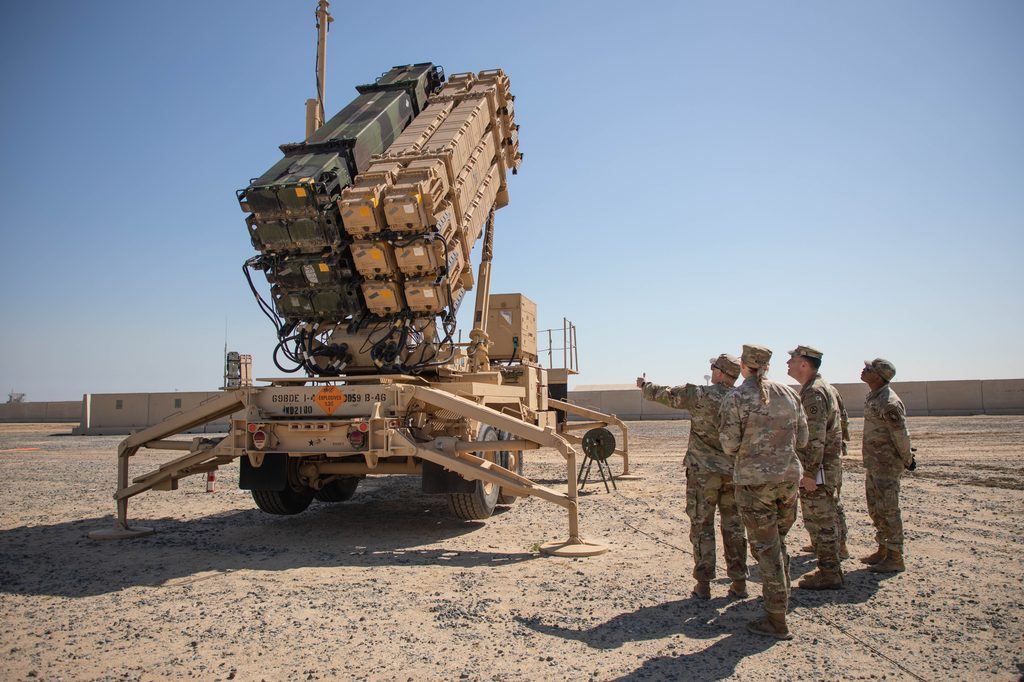
A Patriot PAC-3 interceptor, the missile the US relies on to knock down exactly this kind of threat, costs somewhere between $3.7 million and $7 million per shot, depending on the variant. That means intercepting a single $30,000 drone with a Patriot missile can cost more than one hundred times what the drone itself was worth. Military planners call this attrition economics, and the logic runs entirely in the attacker’s favor: fire enough cheap drones, and eventually the defender either runs out of expensive interceptors or starts making decisions about which sites are worth defending with them at all.
Port Shuaiba answers that question by omission. It had no Patriot battery, no counter-rocket, artillery, and mortar system, nothing designed to stop a slow-moving drone at short range. Whatever calculation put interceptors at Camp Arifjan and the ports handling merchant cargo apparently didn’t extend to a converted logistics office a mile from the piers. The gap wasn’t a failure of technology. It was a failure of deciding where the technology needed to go.
Khobar Towers, 1996
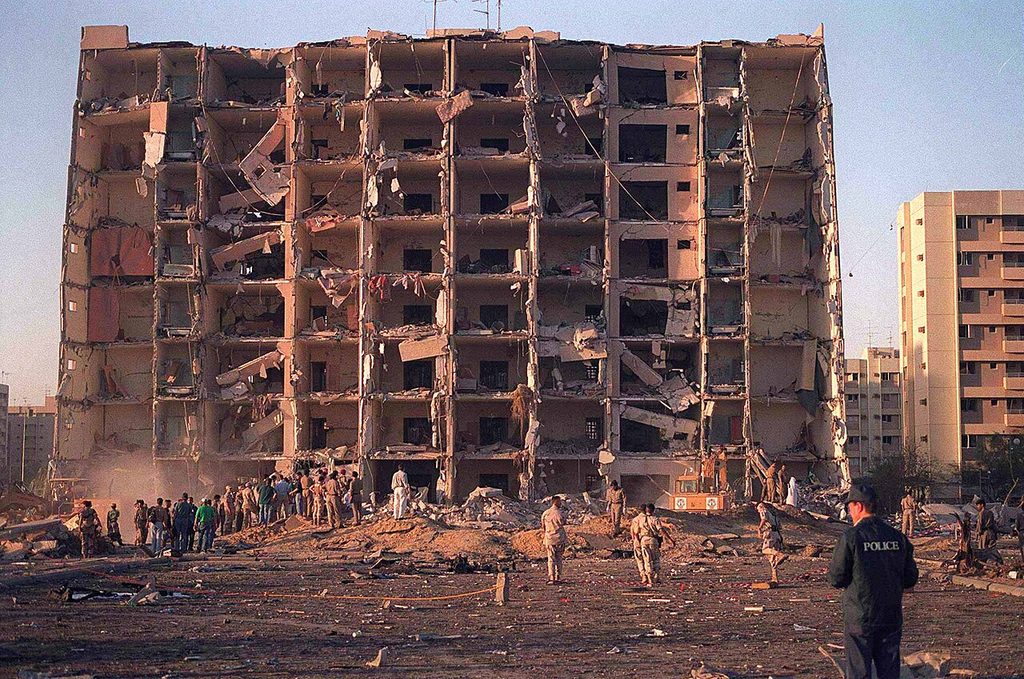
Thirty years earlier, the Pentagon faced a version of the same problem with a very different weapon. On June 25, 1996, a fuel truck packed with roughly 5,000 pounds of explosives detonated outside the northern perimeter of Khobar Towers, a housing complex in Dhahran, Saudi Arabia, sheltering US Air Force personnel supporting Operation Southern Watch. Nineteen airmen died. Close to 500 people were wounded.
The bombing wasn’t a surprise in the way it’s sometimes remembered. A car bomb had already killed five Americans in Riyadh seven months earlier, and the Air Force’s own Office of Special Investigations had completed two vulnerability assessments of Khobar Towers, one in July 1995 and a follow-up in January 1996, specifically because of that earlier attack. Retired General Wayne Downing, appointed by Secretary of Defense William Perry to investigate, found that most of the corrective actions from that January assessment had, in fact, been completed by the time of the bombing.
Except for one. The January 1996 report had recommended relocating personnel to reduce the concentration of aircrews in one place, precisely the kind of dispersal that might have limited casualties from a single truck bomb. That recommendation was still sitting unfinished on June 25.
The Same Gap, Two Different Weapons
Line the two incidents up and the shape is nearly identical, even though thirty years and two very different weapons separate them.
At Khobar Towers, the known risk was a large vehicle bomb, and the known fix, already recommended and approved, was dispersing personnel so no single attack could hit everyone at once. That fix wasn’t finished when the bomb went off. At Port Shuaiba, the known risk was drone and missile attack once the Iran war began, and the instinct that followed was exactly the dispersal Khobar Towers had needed thirty years earlier: get people off the concentrated base and into smaller, separated locations. That instinct was followed. What wasn’t followed through was making sure the new, scattered locations had any defense at all. Khobar Towers failed to disperse in time. Shuaiba dispersed, and forgot to defend what it dispersed into.
Both incidents also share something else: after each attack, the true costs to the accused chain of command remained contested for a long time. After Khobar Towers, Congress pressured Secretary of Defense William Cohen for accountability, and Brigadier General Terryl Schwalier, commander of the wing at Dhahran, was ultimately denied promotion, a decision that remains debated among those who argue intelligence genuinely didn’t predict the attack’s scale. After Shuaiba, Defense Secretary Pete Hegseth described the strike as a “squirter” defeating a fortified position, while survivors and congressional Democrats, including Representatives Pat Ryan and Maggie Goodlander, insisted the site had no counter-drone capability whatsoever and demanded an independent investigation, one that was still ongoing as of this writing.
And both led, eventually, to expensive corrections. Following Khobar Towers, the Pentagon and Saudi government split the roughly $200 million cost of Operation Desert Focus, relocating more than 4,000 US troops to the remote Prince Sultan Air Base specifically for force protection reasons. Whether Shuaiba produces a comparable, funded, permanent fix for counter-drone coverage at logistics sites across the Gulf is the open question the current investigation is supposed to answer.
What Both Cases Teach
A known future risk and a completed present fix are not the same thing. Khobar Towers had the right recommendation on paper months before the bombing. Shuaiba had the right instinct, get off the concentrated base, in the moment. Neither is worth anything until it’s actually finished, and both bombings happened in the gap between knowing what to do and having done it.
Moving people is not the same as protecting people. Dispersal reduces how many soldiers a single attack can reach. It does nothing about whether the new location can survive an attack at all. Shuaiba shows what happens when relocation gets treated as the entire safety plan rather than the first half of one.
Cheap weapons don’t need to be sophisticated to expose expensive assumptions. A fuel truck and a Shahed drone sit at opposite ends of military technology, yet both found the same kind of hole: a logistics or support site that wasn’t considered dangerous enough to warrant the same protection as a front-line base, until it was hit.
Accountability disputes are part of the pattern, not a distraction from it. Both incidents produced arguments over whether leadership could have known, whether official statements matched what people on the ground experienced, and who should answer for the gap. That argument isn’t separate from the force protection failure. It’s usually where the next round of fixes actually gets decided.
The bill always comes due eventually, the only choice is when. Desert Focus cost $200 million after the fact. Whatever comprehensive counter-drone coverage the Gulf eventually gets will cost real money too. The question every commander faces before an attack, not after, is whether that money gets spent as prevention or as a monument.
Conclusion
Thirty years and two entirely different weapons apart, the US military made a version of the same mistake twice: knowing troops were exposed, taking half the necessary action, and finding out the hard way which half was missing. Khobar Towers taught the Pentagon that dispersal without follow-through gets people killed. Shuaiba is teaching, right now, while the investigation is still open, that the same is true in reverse, dispersal without defense gets people killed just as surely. The pattern isn’t new. What’s still an open question is whether this round of lessons gets finished before the next cheap weapon finds the same gap.
Sources & Further Reading
- Report to the President and Congress on the Protection of U.S. Forces Deployed Abroad (The Downing Report), September 15, 1996
- U.S. Air Force, Report of Investigation, The Khobar Towers Bombing, 25 June 1996
- William J. Clinton Presidential Library, “Khobar Towers Bombing” collection
- CSIS Missile Threat, cost estimates for Shahed-131/136 production
- Office of Congressman Pat Ryan, press releases on the Port Shuaiba investigation
Related Reading:
Urban Warfare Doctrine: Lessons from Stalingrad to Mariupol
War Lessons from WW2: What the Second World War Still Teaches Military Planners