Nobody named a target. That was the point. When Mohammed bin Salman, Recep Tayyip Erdoğan, and Shehbaz Sharif signed the Mecca Joint Defence Agreement on August 7, 2026, the joint statement talked about “collective deterrence” and “regional stability” and never once said the word Iran. It didn’t need to. Within hours, Iranian officials had named themselves anyway and by the end of that week, so had Israel, and so, more quietly and more angrily, had the UAE. Three governments that weren’t in the room reacted like the document had their name on it. In a sense, it did.
That’s the part worth sitting with. A pact that avoided naming any adversary somehow managed to unsettle Tehran, alarm Tel Aviv, and infuriate Abu Dhabi, all at once, without a single new weapon changing hands. The reactions tell you more about what this pact actually is than the text of the agreement does.
Tehran’s Shrug Was Louder Than It Looked
Iran’s first move was almost theatrical. Foreign Minister Abbas Araghchi posted within hours of the signing: Iran’s armed forces had already shown their strength against “the world’s most expensive military,” and when Muslims stood together they could face outside threats without anyone’s help. Translation: nice pact, but we already proved we don’t need one.
The tone got sharper further down the chain. Ebrahim Rezaei, a member of parliament’s national security committee, dismissed it outright on X — a paper agreement with Turkey and Pakistan would bring the Saudis no security, he wrote, any more than years of leaning on Washington had. Alireza Arafi, the Friday prayer leader in Qom, was blunter still: borrowed security and begging America won’t save you. And Iranian state television ran footage of missile inventories the same week, timed a little too well to be coincidence.
But watch what Iran’s Foreign Ministry actually said in the days after, once the initial bravado wore off: spokesman Esmail Baghaei told reporters the pact reflected regional states finally learning they couldn’t outsource their security to Washington. That’s not mockery. That’s Iran claiming partial credit for a pact built, in part, to guard against Iran. Tehran gets to have it both ways dismiss the pact as toothless in public, while telling its own population that the region is finally waking up to what Iran had been saying about American security guarantees all along.
Israel’s Problem Was Never Just Iran
Israel’s reaction landed differently, and faster. A senior Israeli official told Ynet plainly: this agreement troubles us, this is an alliance aimed against Israel. Not against Iran. Against Israel. That’s a distinction worth pausing on, because it means Tel Aviv read the Mecca pact primarily through the lens of its own regional standing, not Tehran’s.
Some of that predates the pact by months. Naftali Bennett had already called Turkey “the new Iran” back in February, warning about a hostile Sunni axis backed by nuclear-armed Pakistan before the ink on this agreement existed. So when the Mecca pact finally materialized, it landed on ground Israeli officials had already primed themselves to see as hostile.
There’s also a colder, more commercial worry sitting underneath the security one. Saudi Arabia anchors the India-Middle East-Europe Economic Corridor, the transit project Israel and India have spent years building to connect Gulf trade to Haifa’s port — with Turkey pointedly left out of that route and pushing a rival corridor of its own. Pull Saudi Arabia closer into Ankara’s orbit, and Turkey gains leverage over a project it was never invited to join. And every step that binds Riyadh tighter to Ankara and Islamabad is a step further from the Abraham Accords, since neither of Saudi Arabia’s new defense partners would tolerate the Crown Prince normalizing with Tel Aviv on the side. That’s arguably a bigger loss for Israel than any troop number in the Global Firepower rankings, a door quietly closing, not a wall going up.
Then there’s the deterrence question nobody wants to say out loud but everyone keeps circling back to: does a Pakistani bomb now sit, even implicitly, behind Saudi and Turkish borders? Officially, no the pact includes no nuclear language, and Saudi officials have explicitly rejected any suggestion of an arms race or “nuclear ambitions.” Analysts mostly agree Pakistan’s arsenal stays pointed at India, not repurposed as a regional umbrella. But “mostly agree” is not the same as “settled,” and Israeli security officials have said the mere possibility of that umbrella is enough to change the strategic conversation, even if nothing formal ever gets written down.
The Country That Wasn’t Invited Is the Angriest One
Here’s the part most coverage undersells: the loudest regional unease didn’t come from Tehran or Tel Aviv. It came from Abu Dhabi, which wasn’t in the room and wasn’t asked to be.
The UAE’s relationship with Saudi Arabia has been fraying for a while, competing over Yemen, over OPEC+ quotas, over who gets to be the Gulf’s indispensable partner to Washington. Add Pakistan’s studied neutrality while Iranian strikes were hitting Emirati territory during the current war, and Abu Dhabi had already filed that away as a grievance before Mecca happened. Then Riyadh went and signed a mutual-defense pact with the country that wouldn’t even take its side, and didn’t extend an invitation to the UAE at all.
Emirati academic Abdulkhaleq Abdallah didn’t bother being diplomatic about it, posting a barbed jab widely read in the region as mockery of Pakistan’s role in the deal. Emirati foreign policy analyst Huda Albadi told The Jerusalem Post the whole thing was a “paper tiger” and, tellingly, that her real worry wasn’t the pact’s strength but its framing: it casts Israel as the destabilizing actor in the region rather than Iran, a framing the UAE, with its own normalized relationship with Jerusalem, has every reason to reject.
Strip away the diplomatic language and what’s left is a fairly blunt regional turf fight. Saudi Arabia just built a security architecture that sidelines its closest Gulf rival while embracing two countries Turkey and Pakistan that Abu Dhabi doesn’t fully trust. The UAE isn’t worried the Mecca pact makes the region less safe. It’s worried the Mecca pact makes Riyadh, not Abu Dhabi, the center of gravity going forward.
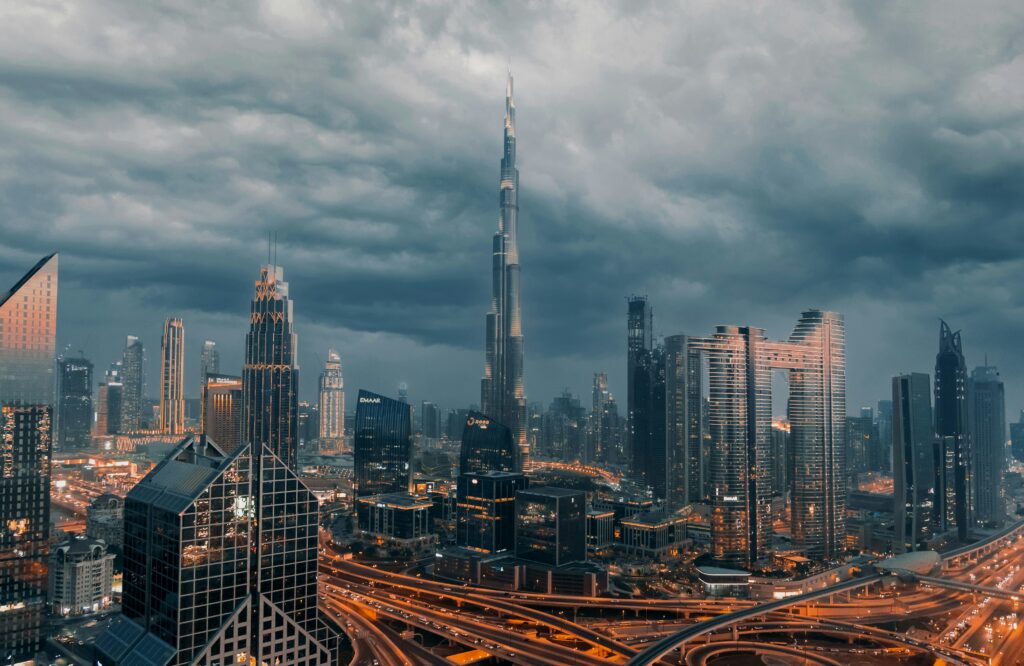
Dubai's skyline, United Arab Emirates.What This Actually Means Outside the Region
Zoom out and the Mecca pact reads less like an anti-Iran alliance and more like three mid-sized powers formally admitting they no longer trust Washington to show up on time. That’s the real story for anyone watching from outside the Middle East. For decades, the region’s security ran through one capital. Riyadh called Washington. Ankara called NATO. Islamabad, at times, called both. Mecca is what it looks like when regional powers stop waiting on that call and build the arrangement themselves.
It won’t stop there, either. Turkish Foreign Minister Hakan Fidan has already floated Egypt as a natural next member, and Pakistan opened its own talks with Kuwait in July. Every additional signatory makes the bloc harder for outside powers to ignore and harder for Israel to route around diplomatically. Meanwhile, in New Delhi and Jerusalem, the response has been to lean harder into their own counter-grouping: the “hexagon” arrangement Netanyahu has floated, linking Israel, Greece, Cyprus, and India. Two competing regional blocs, neither one waiting for an American green light, is not a stable-looking picture. It’s an early one.
None of the three signatories wants a war. Turkish officials have said as much explicitly, calling the pact purely defensive and open to anyone. But intentions and outcomes diverge in exactly the way alliances always have; nobody signs a mutual-defense pact expecting to use it, and then eventually, somebody does. The real test of the Mecca Joint Defence Agreement isn’t the ceremony in Mecca. It’s whatever happens the next time a missile lands somewhere inconvenient, and three governments have to decide whether the paper they signed actually means something.