Introduction: The Trap of the Quick Victory and Military Defeat
Throughout history, the presumption of a swift, decisive campaign has frequently drawn superior military powers into protracted, unwinnable quagmires. From ancient campaigns to modern warfare, strategic overconfidence remains a primary catalyst for military defeat. In mid-August 2026, the ongoing military conflict involving the United States, Israel, and Iran serves as a stark, contemporary case study in how overestimating the efficacy of initial strikes and underestimating the adversary’s endurance can lead to strategic paralysis.
What began in February 2026 with high-profile decapitation strikes intended to cripple Iranian leadership has instead devolved into a grueling war of attrition. Despite the overwhelming conventional superiority of the US-Israeli coalition, the conflict remains deadlocked, underscoring the enduring lesson that overconfidence often blinds military planners to the complexities of the operational environment.
The Catalyst: Miscalculating the Decapitation Strike
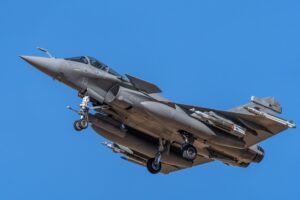
The current regional crisis was ignited on February 28, 2026, when coordinated US-Israeli airstrikes successfully eliminated several high-ranking Iranian officials amid stalled nuclear negotiations. The strategic calculus appeared rooted in a classic premise of overconfidence: that a sudden, overwhelming blow to the adversary’s command structure would induce collapse or force immediate capitulation.
However, rather than fracturing, the Iranian apparatus absorbed the shock and activated its decentralized regional network of allied militias and asymmetric capabilities. The assumption that technological and aerial dominance would yield a swift resolution severely miscalculated the resilience of the targeted state and the subsequent regional blowback.
Relevant Background: The Illusion of Control
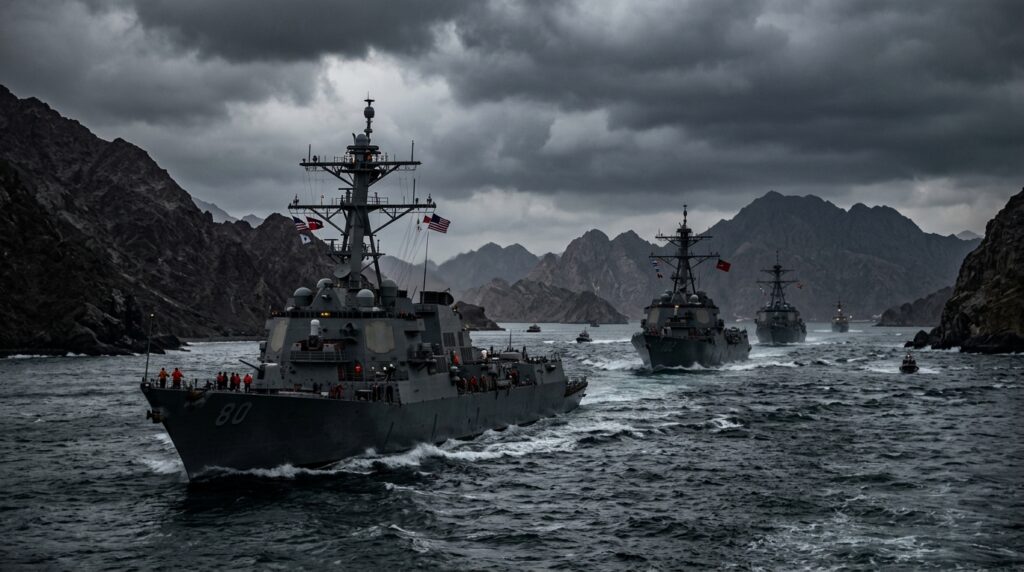
Historically, military defeat rarely occurs in a single catastrophic battle; rather, it manifests when a superior force exhausts its political capital and resources attempting to impose an unattainable end state. The 2026 conflict mirrors this trajectory. Following the initial strikes, Iran retaliated with widespread missile and drone barrages and moved to disrupt global commerce by challenging access to the Strait of Hormuz.
As of August 2026, Tehran maintains that it controls the vital waterway, demanding sanctions relief and the unfreezing of assets. Conversely, the US administration asserts “total control” over the passage. Despite these claims, the reality is that maritime traffic remains at near three-month lows. The overconfident assertion of control by Western forces clashes directly with the asymmetric reality of sea denial tactics, a classic friction point that degrades strategic advantage over time.
Strategic Significance: Alienation and Attrition
The strategic significance of this overconfidence extends beyond the immediate battlefield. The belief that regional allies would unconditionally support a prolonged military campaign has proven flawed. Frustration is reportedly mounting among US Gulf allies—including Saudi Arabia, the UAE, and Qatar—regarding the protracted nature of the war and the failure of current diplomatic efforts.
The prolonged Israeli occupation of southern Lebanon, initiated in March 2026 as a secondary front, has further strained regional stability. When military planners overestimate their ability to dictate the tempo and duration of a conflict, they risk alienating the very coalitions required to sustain operations, leading to diplomatic isolation—a precursor to broader military defeat.
Military and Industrial Implications
A protracted conflict born of initial overconfidence places immense strain on military readiness and the defense industrial base. The continuous expenditure of high-end precision munitions, such as air-defense interceptors and cruise missiles, against cheaper, mass-produced asymmetric threats creates a deeply unfavorable cost-exchange ratio.
Furthermore, the persistent disruption of the Strait of Hormuz threatens global supply chains, impacting everything from energy markets to defense manufacturing logistics. The assumption that superior technology negates the need for vast industrial capacity has been severely tested in the 2026 environment, forcing a rapid reassessment of production lines and stockpile sustainability.
Limitations and Unresolved Questions
The current operational environment is defined by severe limitations. The US and Israel face the challenge of projecting decisive power without triggering a broader global conflagration, while Iran faces the limitation of sustaining its economy under severe military and economic pressure.
The primary unresolved question is how either side can achieve a politically acceptable off-ramp. A Pakistan-mediated ceasefire and a June memorandum of understanding temporarily halted large-scale fighting, but failed to produce a durable settlement. The inability to translate initial tactical successes into a cohesive political resolution is the hallmark of a campaign derailed by strategic hubris.
What to Watch Next
Defense analysts and policymakers should closely monitor the following indicators in the coming months:
- Strait of Hormuz Traffic: Any significant increase or decrease in commercial shipping volume will indicate the true balance of power and control in the waterway.
- Gulf Ally Posturing: Shifts in the willingness of nations like Saudi Arabia or Qatar to host US military installations could signal a critical degradation of the US regional security architecture.
- Mediation Efforts: The success or failure of secondary actors, such as Oman or Pakistan, in brokering a comprehensive agreement will determine if the conflict transitions to a frozen state or escalates further.

Conclusion
The trajectory of the 2026 US-Israel-Iran conflict serves as a vital reminder that overconfidence is a powerful accelerant for military defeat. The reliance on initial decapitation strikes and the underestimation of asymmetric resilience have trapped superior conventional forces in a complex, multi-front war of attrition. Ultimately, military supremacy on paper does not guarantee victory if strategic planning is clouded by the hubris of the quick win. Recognizing the limitations of force and the enduring endurance of the adversary remains essential to navigating modern warfare.
Related Reading:
- The Cold War’s Forgotten Proxies: Lessons for Managing Modern Conflict — How superpower competition through third parties shaped the modern world — and what it means for today.
- Mission Command and Decentralized Leadership: Lessons for the Modern Battlefield — Why pushing decision-making to the lowest level transforms military effectiveness.