Introduction
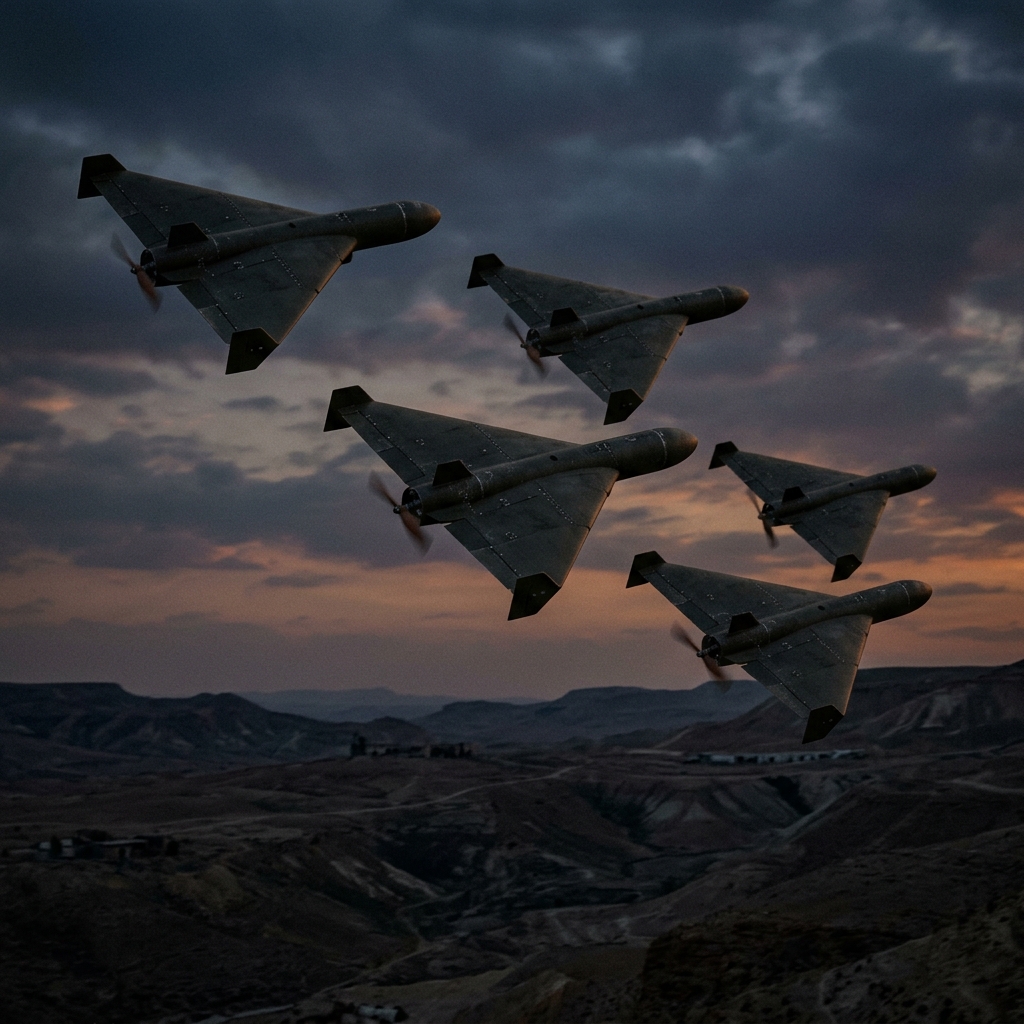
Imagine a radar screen inside a modern air defense command center. Suddenly, instead of showing a handful of distinct, fast-moving fighter jets, the screen is flooded with hundreds of small, erratic blips. They aren’t flying in a straight line; they are weaving, reacting to one another, and converging on the target like a cloud of angry hornets. By the time the air defense operators realize what is happening, they have already run out of interceptor missiles.
This is the nightmare scenario for traditional militaries, and it is precisely what drone swarms are designed to achieve.
Unmanned aerial vehicles (UAVs) are not new. Drones like the MQ-9 Reaper have been hunting targets for over twenty years, while cheap, commercial quadcopters are currently redefining infantry tactics in trenches across Eastern Europe. However, the next major leap in military technology is not about building a better, faster, or stealthier individual drone. It is about mass. It is about taking dozens, hundreds, or even thousands of cheap, autonomous aircraft and networking them together so they function collectively.
By leveraging artificial intelligence and continuous networking, drone swarms are designed to overwhelm traditional, expensive defenses. They provide a resilient, relentless, and cost-effective method of projecting power on the future battlefield, forcing military planners to completely rethink how wars will be fought.
Development Background
To understand why militaries are pouring billions into swarm technology, you have to look at the economic reality of modern warfare. Over the last fifty years, Western militaries have relied on building a small number of extremely capable, highly expensive platforms. A single F-35 Lightning II stealth fighter costs around 80 million dollars to produce and tens of thousands of dollars an hour to fly. To protect these investments, militaries rely on advanced anti-access/area-denial (A2/AD) networks—integrated systems of long-range radars and surface-to-air missiles.
The problem is that risking an 80-million-dollar aircraft against a sophisticated missile network is a losing proposition. Even risking a 20-million-dollar Reaper drone is becoming tactically questionable. Militaries realized they needed a way to punch through these defense networks without risking pilots and without bankrupting themselves in the process.
The inspiration for the solution came directly from nature. Biologists have long studied “swarm intelligence”—observing how flocks of starlings, schools of fish, and colonies of ants achieve incredibly complex, coordinated behaviors without any central leader telling them what to do. The individuals follow simple local rules (don’t crash into your neighbor, move toward the objective), and complex behavior emerges naturally.
Engineers and defense contractors realized that if they could apply these biological principles to robotics, they could solve their tactical dilemma. Instead of building one perfect drone, they could build a thousand cheap ones.
Programs like the US Defense Advanced Research Projects Agency’s DARPA’ OFFSET (OFFensive Swarm-Enabled Tactics) program paved the way for this. More recently, the US Department of Defense launched the “Replicator” initiative, a massive effort specifically designed to counter adversaries’ massed conventional forces by deploying large numbers of “attritable” (low-cost and expendable) autonomous systems. Driven by the rapid maturation of commercial drone technology, miniaturized sensors, and advanced machine learning over the last decade, the military application of true drone swarms has finally crossed from science fiction into reality.
How the System Works
When you see footage of a soldier flying a drone in combat today, you are usually watching a remotely piloted vehicle. There is a human being with a controller looking at a screen, making every decision. Even with advanced loitering munitions (often called “kamikaze drones”), the flight path is either pre-programmed or guided by an operator until the final moments. A drone swarm operates entirely differently. It utilizes distributed autonomy.
The heart of a swarm isn’t the physical aircraft; it’s the software. The swarm may use algorithms that allow individual drones to react to one another and their environment in real-time. Instead of a human pilot pushing a joystick to turn the aircraft, the drones are given a broad, high-level objective by a human commander. For example, the command might simply be to search a specific ten-square-mile grid for enemy artillery. From that point on, the algorithms take over. They dictate how the drones space themselves out to maximize sensor coverage. If one drone detects an obstacle, it reacts, and the drones immediately surrounding it adjust their flight paths to avoid a collision, much like a flock of birds dodging a predator.
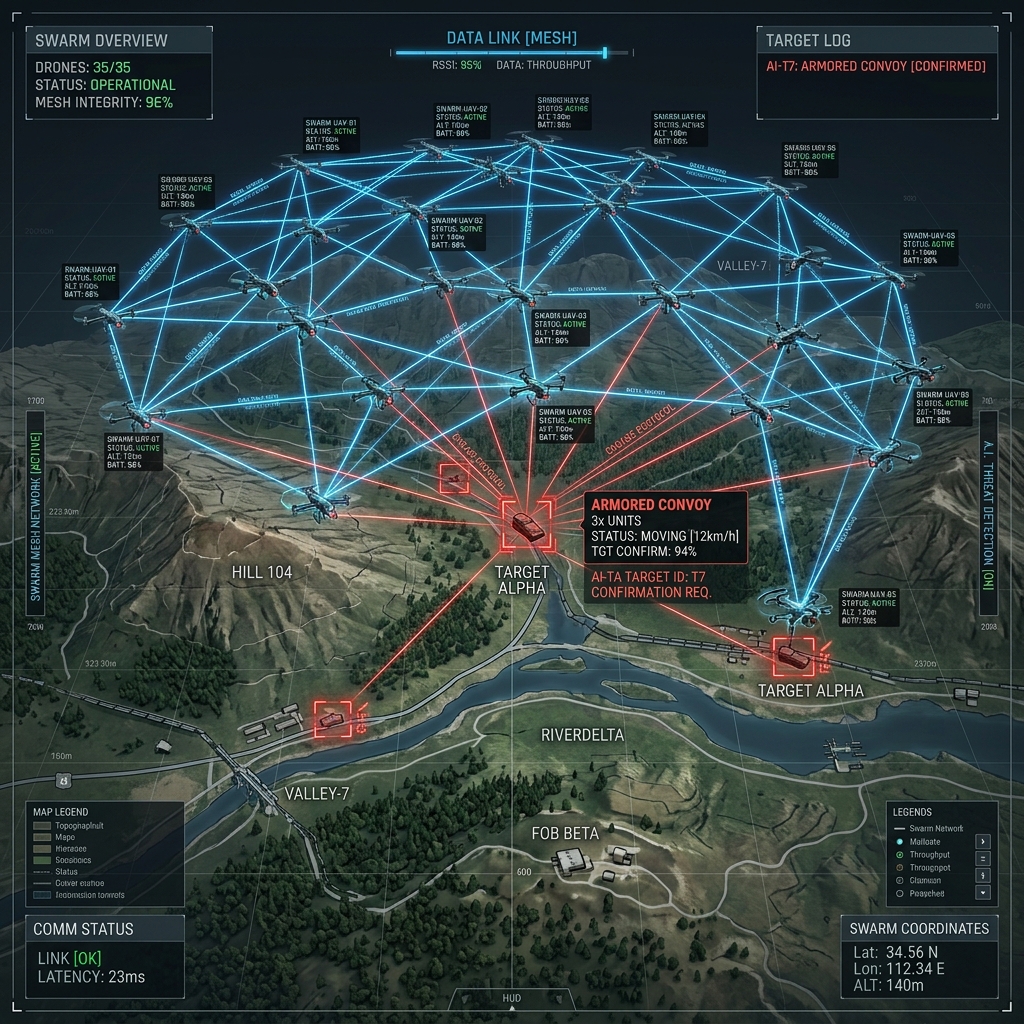
Swarms may use communications links to share information, while better-designed systems can continue limited tasks during a loss of contact. They rely on robust, low-latency communication networks, almost always employing what is known as a “mesh network.” In a traditional network, every drone communicates with a central command hub. If you jam the hub, or destroy it, the drones fall out of the sky or return to base. In a mesh network, every single drone acts as a router and a node. They pass information back and forth directly to one another. This creates incredible resilience. If a central commander’s signal is jammed, the swarm can continue its mission autonomously. If the enemy shoots down twenty drones, the network doesn’t collapse. The remaining drones instantly recognize the gap in their formation, share the new data, reallocate their assigned tasks, and “heal” the network. The mission continues without a pause.
Artificial Intelligence is the critical enabler that makes all of this happen fast enough to be useful in combat. Edge computing—processing data directly on the drone rather than sending it back to a server—allows individual drones to make split-second decisions. Using computer vision and machine learning models, a drone can autonomously identify a tank hidden in a tree line, navigate around a sudden terrain obstacle, and decide which drone in the swarm is in the best physical position to execute a strike. All of this happens in fractions of a second, far faster than a human operator could analyze the situation and issue a command.
Main Specifications and Capabilities
It is important to understand that “drone swarms” refer to a capability and a network architecture, rather than a specific type of vehicle. You can build a swarm out of almost anything. Specifications vary wildly depending on the platforms a military chooses to network together. A swarm could be made up of hand-launched, battery-powered quadcopters that fly for thirty minutes, or it could be composed of jet-powered “loyal wingmen” flying alongside fighter jets at supersonic speeds.
Regardless of the physical aircraft, the capabilities of the swarm network itself generally share several defining traits. The most effective swarms are platform-agnostic, meaning a single swarm does not have to be made up of identical drones. They are often heterogeneous, incorporating small sensor drones flying high up, communication relay drones hanging further back, and explosive-laden loitering munitions flying low to the ground.
Because the drones are networked and autonomous, they possess the capability of dynamic reallocation. They can instantly shift roles based on the battlefield situation. If a sensor drone is destroyed by enemy fire, the swarm’s algorithm can immediately task a strike drone to temporarily take over its surveillance duties until a replacement arrives.
Sensor fusion at scale is another major capability. Instead of relying on a single incredibly powerful radar on an expensive jet, a drone swarm distributes hundreds of cheap sensors across a massive area. The network synthesizes all of this data into a single, high-fidelity picture of the battlespace. Looking at a target from hundreds of different angles simultaneously often provides better intelligence than one expensive sensor looking from a single angle.
Finally, the software allows swarms to scale effortlessly. Depending on the mission, swarms can range from a half-dozen tactical drones supporting an infantry squad clearing a village, up to thousands of systems operating across an entire theater of war, coordinating strikes on a national level.
Combat Role
The intended combat roles for drone swarms capitalize on their sheer numbers, their distributed nature, and their resilience. Military planners envision using them in ways that fundamentally break traditional defensive doctrines.
Primarily, swarms are envisioned for saturation attacks. This is the core tactical advantage of mass. Even the most advanced surface-to-air missile batteries in the world, like the US Patriot system or the Russian S-400, have severe limitations against mass. They possess a limited number of tracking channels and a finite number of interceptor missiles in their tubes. By deploying hundreds of cheap drones simultaneously, an attacking military can simply overwhelm the defense. An adversary is forced into a terrible choice: either allow the drones to strike their targets, or exhaust their limited, multi-million-dollar interceptor missiles shooting down expendable drones that cost a few thousand dollars each. Once the air defense battery is empty, it is defenseless, clearing the way for higher-value manned aircraft or cruise missiles to destroy the actual high-value targets.
Additionally, swarms are intended for distributed Intelligence, Surveillance, and Reconnaissance. In highly contested airspace where sending a traditional spy plane would be a suicide mission, a swarm acts as a broad, survivable sensor net. Even if the enemy shoots down twenty percent of the swarm, the remaining eighty percent continues to stream high-quality, multi-angle video and radar data back to commanders.
They can also perform highly complex electronic warfare. Instead of a single large aircraft trying to jam enemy communications from miles away, a swarm can distribute localized jammers right on top of enemy positions. Drones within the swarm can even act as coordinated decoys, broadcasting radar signatures that mimic the shape and size of a flight of F-16s to draw enemy fire away from the real attack force.
Strengths and Advantages
When observing the tactical realities, the advantages of drone swarms become overwhelmingly clear. The decentralized nature of a mesh-networked swarm ensures absolute resiliency because it has no single point of failure. You cannot defeat the swarm by simply destroying the leader.
Swarms also enforce a crushing cost asymmetry. They force adversaries into highly unfavorable economic exchanges. If a commander can force the enemy to fire a two-million-dollar interceptor missile to destroy a cheap commercial drone frame, they are winning the war of attrition, regardless of who currently controls the airspace.
Furthermore, they induce cognitive overload. Human brains and traditional targeting computers are simply not designed to process hundreds of distinct threats approaching from multiple altitudes and vectors simultaneously. Facing a massive, coordinated swarm attack places extreme, paralyzing stress on human operators and automated defense systems alike.
Finally, swarms provide unrelenting persistence. Human pilots get tired, and single drones eventually run out of fuel. A swarm, however, can maintain a continuous presence over a target area indefinitely. Fresh drones constantly rotate in from the rear to replace depleted or destroyed units while the others return to base to recharge and rearm.
Limitations and Vulnerabilities
Despite their terrifying potential, drone swarms are not an invincible silver bullet. They come with significant technical and logistical hurdles that militaries are still struggling to overcome.
The most glaring vulnerability is their electronic warfare susceptibility. While mesh networks are highly resilient to physical destruction, they fundamentally rely on the electromagnetic spectrum to communicate. In a major conflict between advanced militaries, the airwaves will be saturated with electronic warfare. Intense, wide-area jamming can disrupt the communication between the nodes. Loss of communication can reduce coordination, though some systems may continue limited missions using onboard autonomy. It devolves from a coordinated, intelligent entity back into a disorganized group of individual, uncoordinated aircraft, making them much easier to defeat.
Another concern is algorithmic predictability. Algorithms are essentially highly complex sets of rules. If an adversary can study the swarm, reverse-engineer its logic, or identify the specific behavioral rules governing its movement, they might be able to trick it. A clever enemy could potentially spoof sensor data to herd the swarm into a physical trap, or cause the collision-avoidance algorithms to fail, causing the drones to crash into one another.
The physical reality of operating swarms presents a nightmare of logistics. While the drones themselves might be cheap, the logistics of deploying them are staggering. Storing, transporting, maintaining, programming, and simultaneously launching hundreds or thousands of aircraft in a combat zone requires immense infrastructure. Militaries need specialized launch vehicles, vast amounts of battery charging stations or fuel depots, and teams of technicians to keep them operational.
Finally, there is the accountability gap, which remains a massive ethical minefield. High levels of autonomy raise profound legal and ethical concerns regarding the laws of armed conflict. If a swarm of hundreds of drones is operating autonomously and making its own targeting decisions based on machine learning, it becomes incredibly difficult to assign legal accountability if the swarm misidentifies a civilian convoy as a military target. The gap between human intent and machine execution is a major hurdle for widespread deployment.
Operational Experience
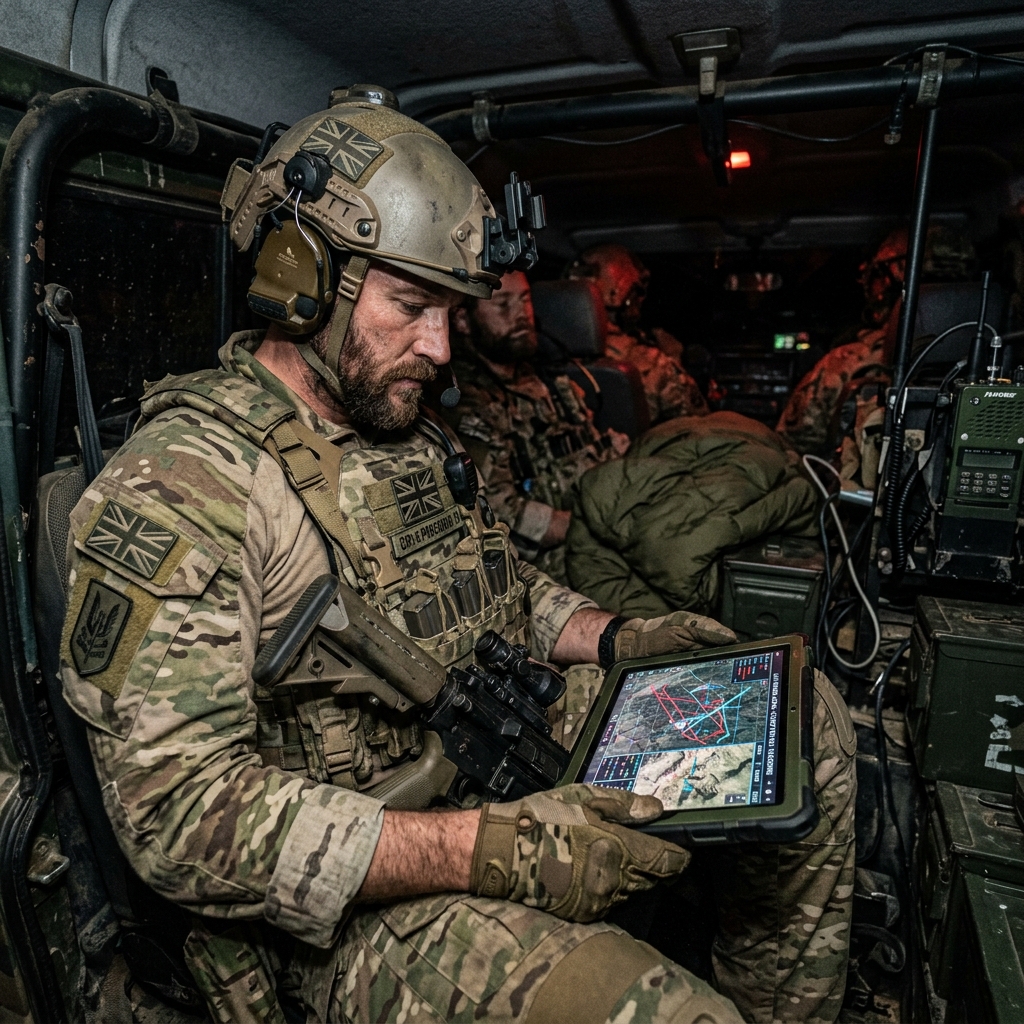
Fully autonomous, large-scale combat swarms remain rare in publicly documented operational use. They mostly remain heavily classified and in the testing and evaluation phase. However, precursors to this technology, and smaller-scale swarms, have absolutely been deployed on the modern battlefield.
The first major glimpse into this future occurred in 2021. The Israel Defense Forces reportedly utilized AI-guided drone swarms during operations in the Gaza Strip. The IDF stated that it used a drone swarm to locate targets associated with rocket-launch operations; public reporting provides limited independent detail on the system’s scale and autonomy. While smaller in scale than the massive swarms envisioned for great-power conflict, this marked one of the first widely acknowledged combat deployments of genuine swarm technology.
More recently, the brutal, grinding war in Ukraine has dramatically accelerated swarm development. While the vast majority of drone operations in Ukraine currently involve individually piloted First-Person View drones or pre-programmed loitering munitions, the limitations of these systems are driving rapid innovation. The intense electronic warfare environment in Ukraine means that operators frequently lose connection to their drones. To counter this, both sides are aggressively pursuing software that allows drones to operate without constant human input. Ukrainian developers have fielded software platforms like “Swarmer,” which allows a single operator to command a localized group of autonomous drones. Publicly described swarm-control tools aim to coordinate multiple drones and reduce reliance on constant operator input; independent evidence on autonomous targeting at scale remains limited. The crucible of the Ukrainian battlefield is rapidly pushing the evolution of swarm autonomy from theory into daily practice.
Comparison with Relevant Systems
To truly grasp the impact of drone swarms, it helps to compare them to the weapons they are designed to supplement or replace.
Compared to traditional manned strike aircraft, drone swarms offer vastly superior survivability in highly contested airspace. The loss of a drone is a financial footnote; the loss of a multi-million-dollar jet and a highly trained human pilot is a national tragedy and a strategic setback. However, manned aircraft still retain superior heavy payload capacity. They can carry massive bunker-busting bombs that small drones simply cannot lift, and they possess the unmatched adaptability of human cognition in ambiguous, politically sensitive situations. Swarms will not replace fighter jets entirely, but they are designed to clear the path for them.
Compared to individual loitering munitions, swarms offer the critical element of coordination. A single loitering munition is a one-way weapon that flies to a designated area, looks for a target, and detonates. A swarm, on the other hand, is a cooperative entity. It communicates, searches an area dynamically, divides multiple targets among its members to ensure no effort is wasted, and can abort, re-evaluate, or redirect strikes collectively based on new information emerging in real-time.
Future Development
The immediate future of drone swarms hinges on a concept the defense industry calls crossing the “valley of death”—the difficult transition between building a few successful experimental prototypes and scaling up to mass production and field deployment. Initiatives like the U.S. Replicator program are explicitly designed to bridge this gap, aiming to field autonomous systems by the thousands within aggressive timelines. However, scaling manufacturing, securing supply chains for critical components like microchips, and integrating these radically new systems into traditional military command structures remains a monumental task.
Looking further ahead, development will almost certainly focus on heterogeneous, multi-domain swarms. The swarms of the future will not just be aircraft. We will see an aerial drone swarm coordinating seamlessly with unmanned surface vessels hunting submarines at sea, and robotic combat vehicles breaching defenses on land, all sharing the same AI brain and communicating across the same mesh network.
Furthermore, advancements in artificial intelligence will likely reduce the swarm’s reliance on easily jammed radio frequency communications. Future swarms may coordinate visually, watching each other’s movements like a flock of birds, or communicate through brief, highly directional laser data bursts. This evolution would render them nearly invisible and immune to traditional electronic warfare tactics.
Conclusion
Drone swarms represent one of the most significant paradigm shifts in the history of warfare. They mark a definitive move away from prioritizing individual platform capability and a decisive pivot toward prioritizing network capacity, emergent intelligence, and sheer mass.
By leveraging distributed autonomy, these systems are uniquely poised to neutralize the advantages of exquisite, expensive, and heavily defended traditional militaries. While profound challenges in electronic warfare resilience, mass manufacturing, and the ethical realities of autonomous targeting remain unsolved, the strategic imperative is clear. The ability to project overwhelming, resilient force without risking human life practically guarantees that drone swarms will not just be a feature of future warfare, they are likely to become an increasingly significant feature of future warfare.
Related Reading: