By Strategic Affairs Desk · May 31, 2026 · 13 min read
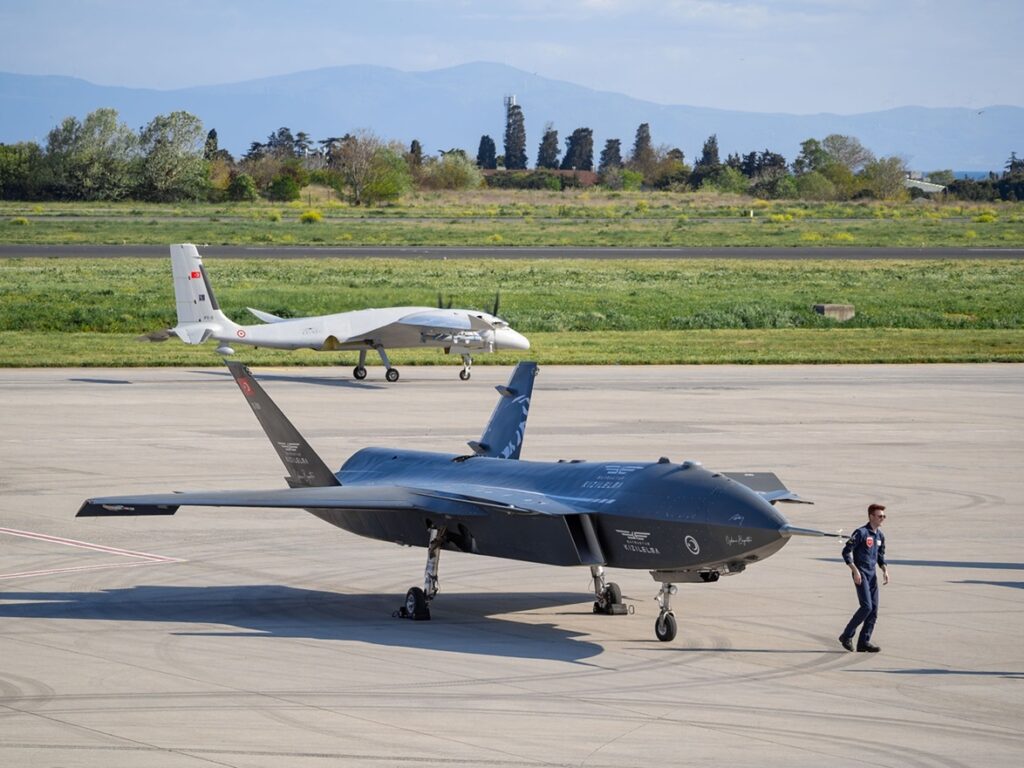
For three-quarters of a century, the recipe for military dominance was simple: control the skies. From the Battle of Midway to the deserts of Iraq, air superiority was the prerequisite for ground maneuver and naval freedom. Yet today, over the battlefields of Eastern Europe and the contested borders of the Middle East, the skies are crowded but empty of manned fighters. The multi-million dollar stealth jet, designed to operate in high-altitude sanctuary, is being grounded by networks of cheap, hand-held surface-to-air missiles, while the space just above the tree line is dominated by swarms of commercial quadcopters and low-cost kamikaze drones. Traditional air superiority is dead, replaced by a grueling, democratized state of absolute air denial.
Introduction: The Shattered Sky
In the strategic lexicon of modern warfare, “air superiority” was once considered a permanent condition of Western military operations. It was the shield under which armor advanced, ships sailed, and logistics flowed. If you possessed the fifth-generation stealth fighters, the airborne early warning platforms, and the precision-guided weapons, you ruled the sky.
The rapid proliferation of Unmanned Aerial Vehicles (UAVs) has shattered this assumption.
Warfare is undergoing its most significant tactical disruption since the introduction of the internal combustion engine. The sky is no longer a monolithic domain controlled by the side with the most advanced aerospace industry. Instead, it has been fractured into layers. While high-altitude airspace remains contested by expensive surface-to-air missile (SAM) networks, the lower atmosphere the tactical airspace from the ground up to a few thousand feet has been occupied by an entirely new class of weapons.
This transformation is not characterized by larger, more advanced drones like the American Reaper drone or Global Hawk, which are just as vulnerable to SAMs as manned aircraft. It is driven by the democratization of flight: mass-produced, commercial quadcopters, First Person View (FPV) racing drones, and low-cost delta-wing kamikaze platforms. By combining civilian electronics with military-grade explosives, small nations, insurgent groups, and non-state actors are achieving capabilities that once belonged only to superpowers — and they are doing it at a fraction of the cost.
I. The Paradigm Shift: Air Superiority vs. Air Denial
The classical doctrine of air superiority, defined by the US Air Force, is the “degree of dominance in the air battle of one force over another which permits the conduct of operations… without prohibitive interference.” To achieve this, militaries invest hundreds of billions of dollars in stealth technology (like the F-35), radar-evading coatings, and advanced electronic warfare suites designed to penetrate integrated air defenses.
Drones bypass this entire competitive framework by shifting the objective from air superiority to air denial.
The Cost-Performance Disconnection
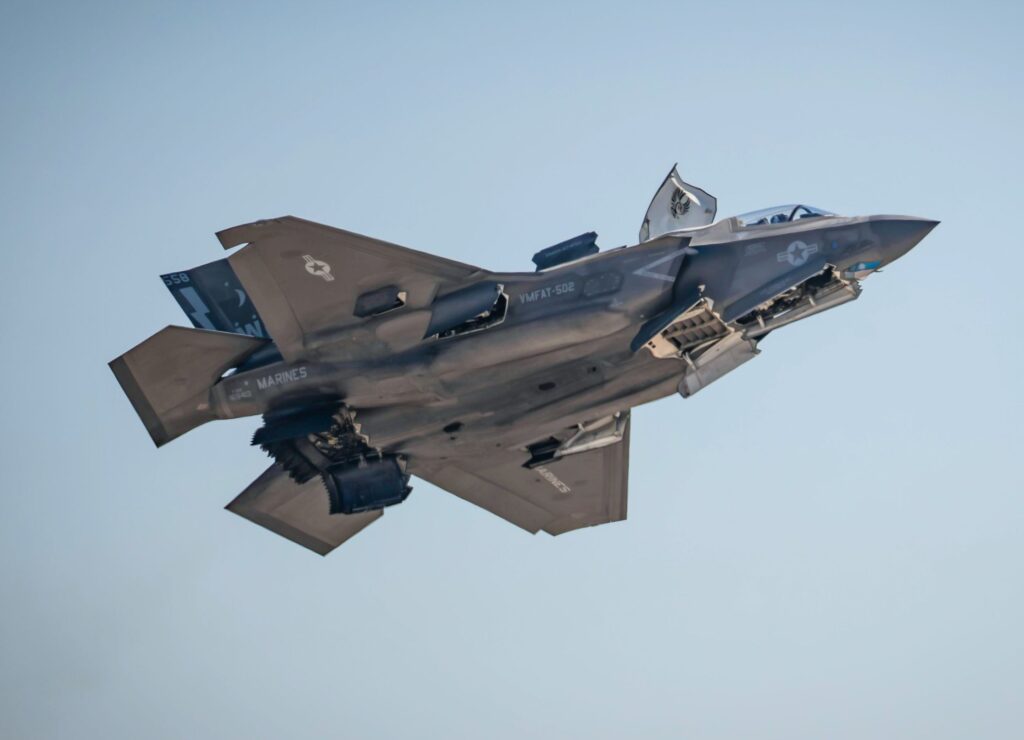
An F-35 Lightning II costs approximately $80 million to $100 million to purchase, and tens of thousands of dollars per hour to fly. A single air-to-air missile costs over $1 million.
In contrast, a commercial FPV racing drone modified to carry an RPG warhead costs roughly $500. A long-range kamikaze drone, capable of flying hundreds of miles, costs between $20,000 and $50,000.
| Capability Category | Traditional Manned Aviation | Modern Drone Fleet |
|---|---|---|
| Unit Cost | $80M – $100M (Stealth Fighter) | $500 (FPV) / $20K (Long-Range Strike) |
| Attrition Tolerance | Near Zero (Political & Economic catastrophe if lost) | Extremely High (Designed for single-use consumption) |
| Production Speed | Years per airframe (Complex supply chain) | Hours/Days per unit (Commercial off-the-shelf parts) |
| Pilot Training | Years, costing millions of dollars | Weeks, using commercial simulators |
| Deployment Footprint | Massive airbases, vulnerable runways | A backpack, the back of a pickup truck |
Because drones are cheap and mass-produced, they are attritable — their loss carries no political or economic penalty. An attacking force does not need its drones to survive; it only needs a small percentage of a swarm to slip through air defenses to achieve its objective.
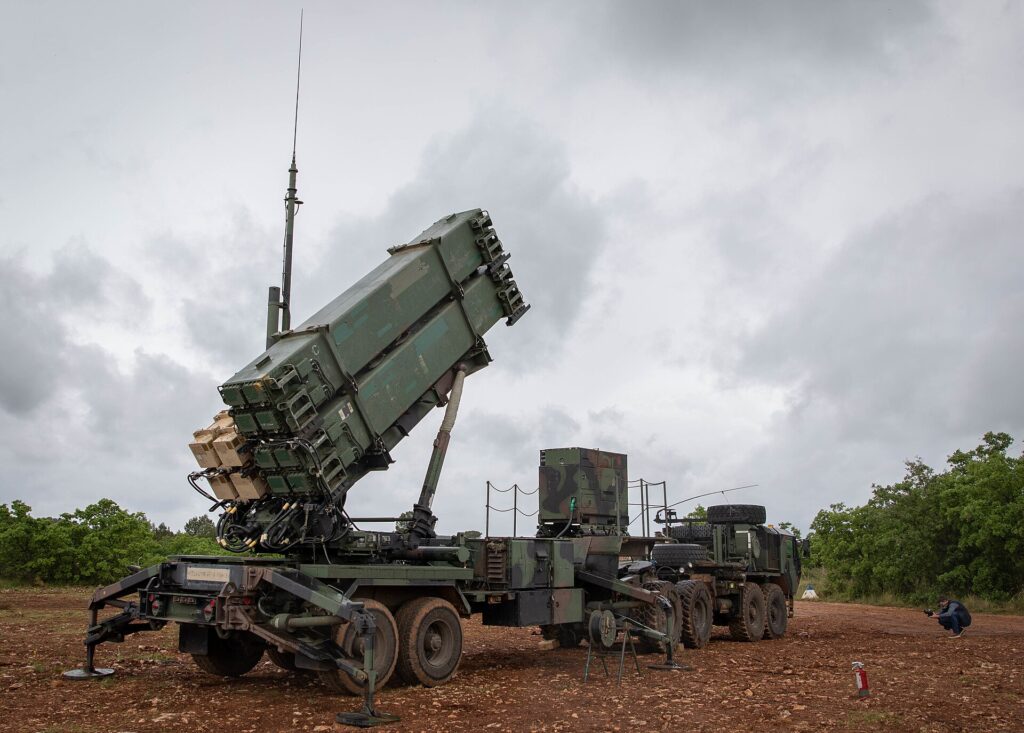
By saturating the air with hundreds of low-cost targets, drones force the defender to expend their limited supply of expensive interceptor missiles. When a $20,000 drone is countered by a $2 million Patriot missile, the economic calculation of air defense collapses. The sky is not won by controlling it; it is won by making it too expensive for the adversary to operate.
II. Close Combat and the FPV Revolution
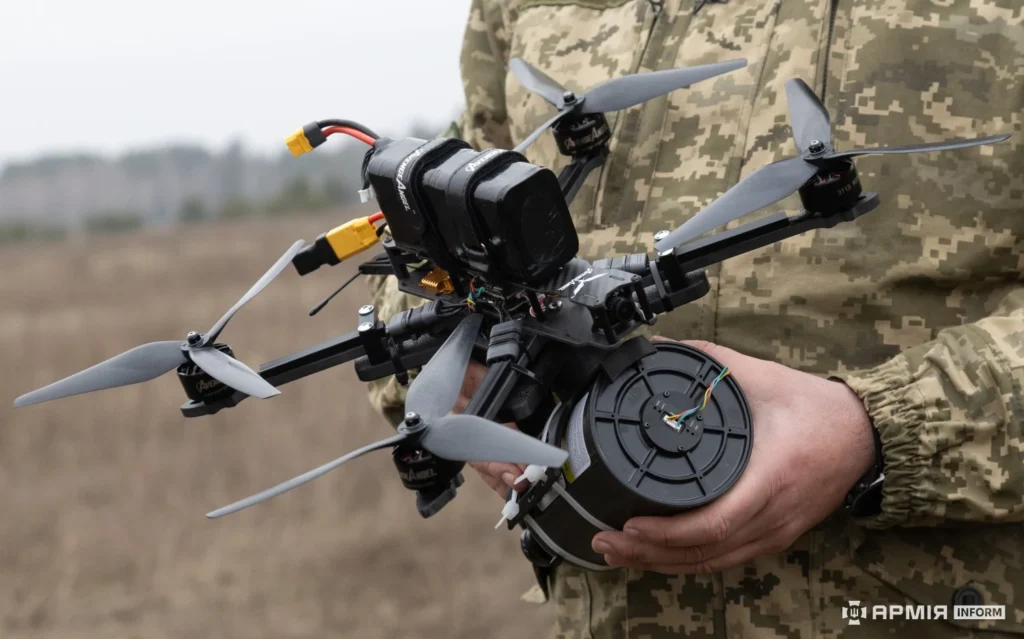
The most radical tactical evolution in modern land warfare is the introduction of First Person View (FPV) drones into close combat. Guided by pilots wearing virtual reality goggles, these small, maneuverable quadcopters are flown directly into targets at speeds exceeding 60 miles per hour.
The Death of Cover
Historically, infantry soldiers could find safety in trenches, bunkers, or behind armored vehicles. FPV drones have eliminated this sanctuary. Because these platforms can hover, turn on a dime, and navigate confined spaces, a skilled pilot can fly a drone:
- Directly into a bunker’s viewing slit or ventilation shaft.
- Underneath concrete bridges where troops are sheltering.
- Into the open hatch of a main battle tank.
- Down the length of an infantry trench line, chasing individual soldiers.
This has altered the tactical geometry of the front line. The traditional division between “front line” and “rear area” has dissolved. Any soldier or vehicle within three to five miles of the contact line is under constant surveillance and subject to immediate precision strike.
Furthermore, FPV drones have democratized precision guidance. Historically, only advanced armies could deploy precision-guided munitions (like Excalibur artillery rounds or Hellfire missiles), which required expensive laser designators or GPS guidance networks. Today, a $500 FPV drone provides the individual infantry squad with its own organic, guided artillery system, capable of target acquisition and strike in a single platform.
III. Long-Range Strike Drones and the Collapse of Strategic Depth
While FPV drones dominate the tactical line of contact, a parallel revolution is taking place at the strategic level. Long-range, one-way attack (OWA) drones, often referred to as “kamikaze” or “loitering” munitions, are redefining the meaning of strategic depth.
These platforms, such as the Iranian-designed Shahed-136 or various domestic derivatives developed by Ukraine, are essentially low-cost cruise missiles. Powered by simple lawnmower-style internal combustion engines and guided by commercial GPS systems, they fly at low altitudes, using pre-programmed waypoints to bypass radar networks.
Targeting the Economic Engine
Because these drones have ranges exceeding 600 miles, they allow nations and non-state groups to strike deep behind front lines, targeting critical infrastructure that was once considered safe:
- Energy Grids: Power plants, electrical substations, and transformers are highly vulnerable to small explosive payloads. A coordinated strike using a dozen cheap drones can disable a regional power grid for weeks.
- Oil Refineries & Storage Facilities: Industrial chemical installations are fragile targets. A single drone strike on a distillation tower can cause catastrophic secondary fires, costing millions of dollars in damage and disrupting fuel supplies for months.
- Logistics Hubs: Railway junctions, ammunition depots, and supply ports can be monitored and struck systematically, strangling the supply lines of the front-line forces.
This long-range strike capability has transformed the strategic calculation of defensive forces. A nation can no longer concentrate its air defenses at the front line; it must distribute its limited radar and missile batteries across its entire territory to protect its cities and industrial heartland. This distribution of defense assets weakens the front line, creating gaps that further invite attack.
IV. Case Studies in the New Geometry of War
The transition from traditional air superiority to drone-dominated air denial is not a theoretical prediction; it is being written in the details of three distinct regional theaters.
1. The Ukrainian Crucible: The Deadlocked Sky
The war in Ukraine represents the primary laboratory for modern drone warfare. In the opening weeks of the 2022 invasion, traditional aviation played a significant role. However, within months, both Russian and Ukrainian integrated air defense systems (comprising long-range S-400 and Patriot batteries, medium-range Buk and NASAMS systems, and thousands of shoulder-fired MANPADS) established an absolute envelope of air denial.
Neither side can fly manned fighter jets close to the front line without facing immediate destruction. The resulting vacuum has been filled entirely by unmanned systems:
- The Reconnaissance Network: Thousands of small commercial drones (such as DJI Mavics) hover constantly over the battlefield. The moment a tank moves, a soldier digs a trench, or an artillery piece fires, it is spotted. The battlefield has become completely transparent, making surprise maneuvers virtually impossible.
- The FPV Swarm: FPV drones have replaced traditional artillery as the primary destroyer of armored vehicles. Both sides manufacture tens of thousands of these platforms monthly in decentralized workshops, using civilian component supply chains.
- Strategic Saturation: Ukraine has deployed fleets of domestically produced long-range drones to strike Russian oil refineries and military airfields deep inside Russian territory, demonstrating that strategic depth can be bypassed without a conventional air force.
In this environment, the traditional concept of air superiority has been rendered obsolete. The sky is contested not by pilots dogfighting at Mach 2, but by electronic warfare specialists trying to jam the control frequencies of plastic quadcopters.
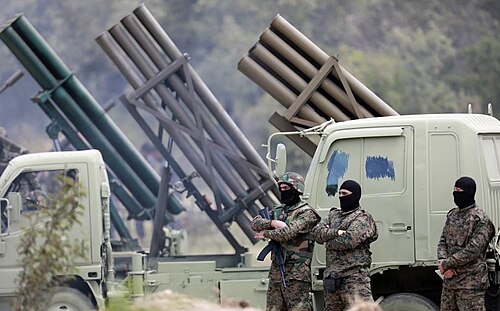
2. Israel-Hezbollah: Bypassing the Iron Shield
Israel possess one of the most advanced air defense networks in the world, built around the Iron Dome, David’s Sling, and Arrow systems, supported by state-of-the-art Patriot batteries and F-35 stealth fighters. This network was designed to intercept high-speed ballistic missiles and unguided rockets.
In the ongoing border conflict with Hezbollah in southern Lebanon, this network has faced a crisis of adaptation:
- Low-Altitude Infiltration: Hezbollah has deployed small, low-radar-signature kamikaze drones that fly down valleys and follow the terrain, slipping underneath the detection envelope of Israeli early-warning radars.
- Targeting Surveillance Infrastructure: Hezbollah has systematically targeted Israeli electro-optical sensors, radar installations, and communication towers along the northern border using precision-guided kamikaze drones. By blinding the sensors, they create blind spots through which subsequent drone flights and rocket barrages can pass undetected.
- The Swarm Threat: The threat of coordinated drone attacks designed to saturate the Iron Dome’s radar tracking capacity is a constant strategic concern. If a swarm of fifty cheap drones is launched simultaneously, it can overwhelm the system’s interceptors, allowing larger, more destructive missiles to reach their targets.
This border conflict demonstrates that even the most technologically sophisticated air defense network can be bypassed and degraded by low-cost, asymmetric drone tactics.
3. India-Pakistan: The Quiet Infiltration along the LoC
The border between India and Pakistan, particularly the Line of Control (LoC) in Jammu and Kashmir and the international border in Punjab, has historically been characterized by conventional military standoffs, artillery duels, and infiltration by armed militants.
In recent years, the nature of this confrontation has shifted quietly into the unmanned domain:
- Smuggling and Payload Delivery: Pakistani actors have increasingly utilized commercial, GPS-guided hexacopters to smuggle payloads — including assault rifles, pistols, ammunition, hand grenades, narcotics, and counterfeit currency — across the border, bypassing traditional fence lines and border outposts. These flights occur at night, at low altitudes, making detection by traditional military radar networks extremely difficult.
- Border Surveillance and Intelligence: Both militaries utilize small quadcopters for real-time surveillance of forward outposts along the rugged terrain of the LoC. This constant observation has made the undetected movement of patrol teams or the construction of new defensive positions nearly impossible.
- The Counter-UAS Arms Race: The infiltration threat has driven both nations to invest heavily in counter-drone technologies. The Indian Army and border security forces have deployed static and mobile counter-UAS systems, utilizing radio-frequency jamming, spoofing, and electro-optical tracking, while both sides scramble to acquire domestic manufacturing capabilities for armed drones and loitering munitions.
The India-Pakistan border demonstrates that drones are not just wartime weapons; they are active instruments of gray-zone conflict, challenging border security and sovereignty during peacetime.
V. The Economic Deficit of Modern Air Defense
The rise of drone warfare has exposed a fundamental economic imbalance in modern air defense doctrine. The weapons designed to protect airspace are vastly more expensive than the threats they are fighting.
The Interceptor Dilemma
When Houthi forces in Yemen launched low-cost kamikaze drones at commercial shipping lanes in the Red Sea, US and allied navies responded by firing Aster and SM-2 interceptor missiles.
A single SM-2 missile costs approximately $2 million. A Houthi drone costs roughly $10,000 to $20,000.
This is an unsustainable economic equation. Even if the defense succeeds in intercepting every target, the attacking force wins the war of attrition by exhausting the defender’s treasury and missile stockpiles. A modern destroyer carries a finite number of vertical launch cells; once those missiles are fired, the ship must return to a specialized port to reload, leaving the fleet vulnerable.
The Search for Technological Solutions
To resolve this cost asymmetry, militaries are scrambling to develop new classes of air defense systems:
- Directed Energy Weapons (DEWs): Laser systems (such as the UK’s DragonFire or Israel’s Iron Beam) and high-power microwave (HPM) weapons offer the promise of a “limitless magazine.” The cost of a laser shot is measured in dollars — essentially the cost of the electricity required to power the system — eliminating the economic deficit of missile interception.
- Guns and Kinetic Interceptors: The revival of rapid-fire gun systems (like the Phalanx CIWS or German Gepard) using programmable, air-burst ammunition provides a cheaper kinetic option for close-in defense.
- Counter-Drone Drones: Deploying small, fast quadcopters equipped with nets or kinetic warheads to hunt and destroy enemy drones at low cost is emerging as a primary tactical solution.
Until these technologies are deployed at scale, however, the economic advantage in the sky remains firmly with the attacker’s drones.
Conclusion: The Democratized Sky
The era of traditional air superiority is closing. The assumption that a wealthy nation can buy security by investing in a small fleet of exquisite, multi-million dollar stealth aircraft has been undone by the rise of the attritable machine.
The sky has been democratized. Today, a non-state militia in Yemen, an infantry squad in Ukraine, or a border smuggling network in Punjab can deploy an air wing capable of reconnaissance, precision strike, and strategic deterrence. The cost of entry into the air battle has dropped from billions of dollars to a few hundred.
This does not mean that manned aviation is obsolete. High-performance fighter jets and early-warning aircraft will still play a critical role in high-altitude defense and long-range transport. But they will no longer operate in sanctuary. They must operate in an environment of absolute air denial, where the threat is not a rival pilot, but the invisible swarm.
As geopolitics enters an era of fragmented authority and great-power competition, the nation that dominates the future will not be the one with the most expensive planes, but the one that can build, deploy, and counter millions of small, autonomous machines. The sky is no longer a temple of elite technology; it is a crowded, chaotic commons where the mass-produced algorithm rules.
The views expressed in this article are those of the editorial team and are intended to foster informed discussion on international security, military aviation, and the changing geopolitics of modern warfare.
Related Reading:
- AI in the Kill Chain: Ethical and Tactical Implications — How the acceleration of targeting cycles by algorithms enables the deployment of autonomous drone swarms.
- Urban Warfare Doctrine: Lessons from Stalingrad to Mariupol — Examining the role of drone-based reconnaissance in stripping cover from urban combatants.
- The Battle of Midway: Intelligence, Deception and the Pacific Pivot — How a previous generation’s naval pivot was decided by the tactical integration of naval aviation.